Free standard shipping for orders over $340.
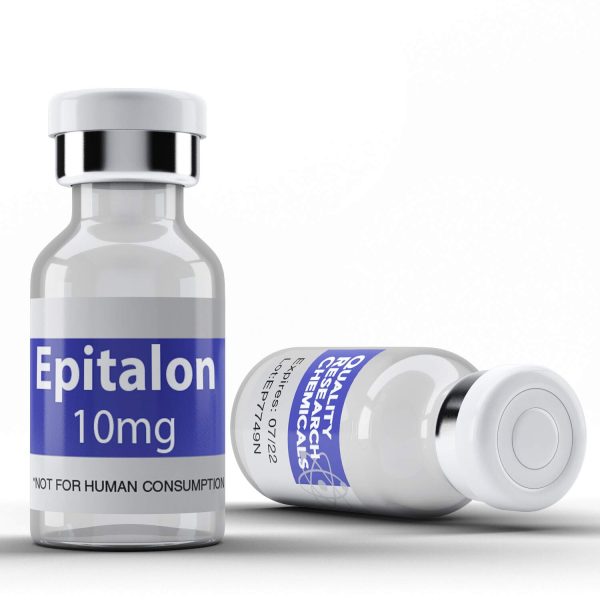
Epithalon 10mg
$35.00
Epithalon 10mg (also known as Epitalon) is a high-purity synthetic tetrapeptide based on the natural pineal peptide Epithalamin. Each vial contains 10mg of premium Epithalon, specifically synthesized for laboratory research into telomerase activation, cellular senescence, and circadian rhythm regulation. This research-grade peptide is lyophilized to ensure maximum structural integrity and consistent results in institutional studies.
| Property | Specification |
|---|---|
| Compound | Epithalon (Epitalon) |
| Sequence | L-Alanyl-L-glutamyl-L-aspartylglycine (Ala-Glu-Asp-Gly / AEDG) |
| Molecular formula | C₁₄H₂₂N₄O₉ |
| Molecular weight | ~390 Da |
| Vial concentration | 10mg single compound |
| Purity | >99% (HPLC & MS verified) |
| Format | White lyophilized powder |
| Storage | -20°C for long-term stability |
Epithalon 10mg for Sale | 99% Pure Telomerase-Activating Pineal Tetrapeptide (Epitalon)
Four amino acids. That’s the entire molecule. And yet Epithalon carries one of the boldest claims in longevity research: that a peptide this small can switch on telomerase, lengthen telomeres, and reset a piece of the cellular aging clock. In cultured human fetal fibroblasts, it extended replicative lifespan by 44% beyond the Hayflick limit — the point at which normal cells are supposed to stop dividing (PepGuide research reference, 2026). For a tetrapeptide, that’s a remarkable line on the résumé.
Epithalon 10mg (also spelled Epitalon) is the high-purity, research-grade version of that compound — sequence Ala-Glu-Asp-Gly, lyophilized, sized for the long-term and high-frequency protocols that aging research tends to demand. Before you buy, though, you should understand where it came from, what the data genuinely shows, and where the honest limits of that data sit. So let’s do exactly that.
Scope note: this is a research compound for in-vitro and laboratory use by qualified professionals. It isn’t approved for human use anywhere, and nothing here is a longevity protocol or medical claim — it’s a summary of what the published research reports.
Where Epithalon Came From
You can’t really understand Epithalon without understanding Vladimir Khavinson. In the 1980s, this Russian gerontologist and his team at the St. Petersburg Institute of Bioregulation and Gerontology isolated a polypeptide extract from the pineal gland — the small brain structure that governs melatonin and circadian rhythm — and called it epithalamin (Naturopathic Science review, 2026).
Then they asked a sharp question: what’s the smallest active fragment of that extract? The answer turned out to be just four amino acids. Khavinson’s group synthesized that minimal sequence, named it Epithalon, and spent the next three decades publishing on it — over 100 papers spanning rodent lifespan trials, melatonin restoration in aging primates, and telomerase activation in human cells (Medsbase longevity guide, 2026). Whatever you make of the claims, the research base is real and unusually long-running.
What Epithalon Does: Telomerase and the Aging Clock
Here’s the mechanism at the center of it all. Telomeres are the protective caps (repeating TTAGGG sequences) on the ends of your chromosomes. Every time a cell divides, they shorten a little — and when they get too short, the cell stops dividing and enters senescence. It’s a built-in countdown.
Telomerase is the enzyme that rebuilds those caps, but in most adult somatic cells it’s switched off. Epithalon‘s primary research interest is that it appears to switch it back on — specifically by stimulating expression of hTERT, the catalytic subunit of telomerase. The seminal demonstration came from Khavinson, Bondarev, and Butyugov (2003) in the Bulletin of Experimental Biology and Medicine, which reported both increased telomerase activity and measurable telomere elongation in human fibroblasts.
Beyond telomeres, the peptide traces back to its pineal origin: research also describes melatonin stimulation, circadian normalization, and reduced oxidative stress markers — the reasons Epithalon shows up in sleep and antioxidant research as well as telomere work.
The Honest Caveats (Read This Before You Buy)
I’d be doing you a disservice to list those numbers without the asterisks — and frankly, a supplier who hides them isn’t one you should trust with your research budget.
First, most of the human evidence comes from Khavinson’s own Russian research program, and large independent Western randomized controlled trials simply don’t exist yet (Guide to Peptide, 2026). The mechanism is biologically plausible and the cell-culture data is solid, but extrapolating from “activates telomerase in a dish” to “extends human lifespan” is a leap the published literature hasn’t fully earned.
Second, there’s a real theoretical concern worth naming: telomerase activation is a double-edged tool. In cells that already carry pre-cancerous changes, switching telomerase on could — in principle — help them keep dividing too (Guide to Peptide, 2026). That’s precisely the kind of question serious research is meant to investigate, and precisely why this belongs in a lab, not a medicine cabinet.
Strong signal, limited replication, open questions. That’s the accurate picture — and it’s a genuinely interesting one to study.
Where Epithalon Fits in Research
| Research Focus | What’s Being Investigated |
|---|---|
| Telomerase Activation | hTERT expression and telomere elongation in somatic cells |
| Circadian Rhythm Regulation | Melatonin secretion and sleep-wake cycle restoration in aging models |
| Antioxidant Defense | Oxidative stress and lipid peroxidation reduction |
| Cellular Longevity | Delay of age-related changes across physiological systems |
| Cellular Senescence | Replicative lifespan and the Hayflick limit in cultured cells |
Specifications and Quality Control
| Property | Specification |
|---|---|
| Compound | Epithalon (Epitalon) |
| Sequence | L-Alanyl-L-glutamyl-L-aspartylglycine (Ala-Glu-Asp-Gly / AEDG) |
| Molecular formula | C₁₄H₂₂N₄O₉ |
| Molecular weight | ~390 Da |
| Vial concentration | 10mg single compound |
| Purity | >99% (HPLC & MS verified) |
| Format | White lyophilized powder |
| Storage | -20°C for long-term stability |
Each batch is verified to 99%+ purity by HPLC and Mass Spectrometry, freeze-dried to protect the compact four-residue sequence, and shipped with a batch-specific Certificate of Analysis (COA). For a peptide this small, exact sequencing is everything — a single wrong residue isn’t Epithalon anymore, so identity verification isn’t optional.
Handling It in the Lab
Small peptides are surprisingly hardy, but good technique still protects your results. Let the sealed vial come to room temperature before opening, then add bacteriostatic or sterile water gently down the inner glass wall — not straight onto the powder. Swirl until it’s clear; don’t shake. Then aliquot into single-use portions so you’re not putting the whole vial through repeated freeze-thaw cycles.
Store the powder frozen at -20°C, sealed and shielded from light. Once reconstituted, keep it at 2–8°C, away from light, and use it within a few weeks. Cloudy or discolored? Retire it — clean data starts with a clean solution.
Epithalon vs Other Longevity Research Peptides
Buyers exploring the biology of aging rarely look at just one compound. Here’s how Epithalon compares to its neighbors by target.
| Compound | Primary Target | Research Angle |
|---|---|---|
| Epithalon | Telomerase / pineal axis | Telomere maintenance, circadian and melatonin research |
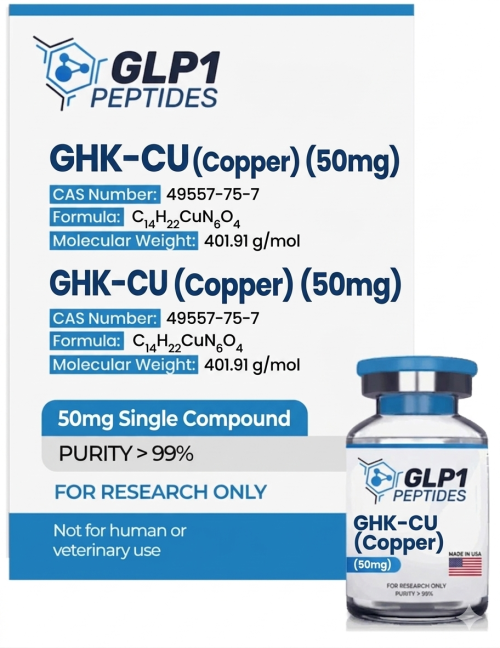
| GHK-Cu | Gene expression / ECM | Collagen, tissue regeneration (most human topical use) |
| MOTS-c | Mitochondria | Mitochondrial function and metabolic aging |
| Thymalin | Thymic-immune axis | Immune-system aging (another Khavinson bioregulator) |
The distinction that matters: Epithalon is the telomere-and-clock peptide of the group. If your research question is specifically about replicative senescence or circadian restoration, it’s the tool aimed at that target — where the others address aging through entirely different doors.
Epithalon 10mg for Sale — Shipping Worldwide
Our research-grade Epithalon 10mg ships as HPLC/MS-verified, COA-backed lyophilized vials, sealed and bench-ready. We fulfill orders for laboratories and independent researchers across the highest-demand markets:
- 🇺🇸 USA — fast domestic dispatch
- 🇨🇦 Canada — reliable cross-border delivery
- 🇩🇪 Germany (Deutschland) — trusted EU logistics
- 🇫🇷 France — secure European shipping
When you buy Epithalon from GLP1 Peptides, you’re getting a verified four-residue sequence backed by documentation — which, for a peptide whose entire identity rides on getting four amino acids exactly right, is the whole ballgame.
FAQs about Epithalon 10mg
1. What is Epithalon 10mg? A 10mg vial of Epithalon (Epitalon), a synthetic pineal tetrapeptide (Ala-Glu-Asp-Gly) supplied as a lyophilized powder for telomerase, circadian, and longevity research.
2. Is Epithalon the same as Epitalon? Yes. “Epitalon” is the transliteration common in Russian-origin publications; “Epithalon” is the international spelling. Same molecule, sometimes written “epithalone” too.
3. How does Epithalon work? It stimulates expression of hTERT, the catalytic subunit of telomerase, which can rebuild telomeres — the protective caps that shorten as cells divide. It also influences the pineal-melatonin axis.
4. What is epithalamin, and how is it related? Epithalamin is the natural pineal-gland polypeptide extract Khavinson’s team studied. Epithalon is the minimal synthetic four-amino-acid fragment that reproduces its key activity.
5. What does the research actually show? Cell studies show telomerase activation and telomere elongation in human fibroblasts, and a 44% extension of replicative lifespan; Khavinson’s elderly cohorts reported reduced mortality. But independent Western RCTs are lacking — the evidence is real but not fully replicated.
6. Are there any concerns with Epithalon? The main theoretical one: activating telomerase in cells with pre-existing pre-cancerous changes could, in principle, support their division. It’s a research question, not a settled risk — and a reason it belongs in the lab.
7. Is Epithalon FDA approved? No. It isn’t approved for human use in the US or elsewhere and is supplied strictly for laboratory research.
8. Why does Epithalon affect sleep in research models? Because of its pineal origin — research describes it stimulating melatonin production and helping normalize circadian rhythms, which is why it appears in sleep and aging studies alike.
9. How should Epithalon 10mg be stored? Powder frozen at -20°C, sealed and dark; reconstituted solution at 2–8°C, out of the light, used within a few weeks. Avoid freeze-thaw cycles.
10. How do you reconstitute Epithalon? Room-temperature vial, bacteriostatic or sterile water added slowly down the glass wall, gentle swirl, then aliquot. The handling section above covers it.
11. What purity should Epithalon be? Aim for 99%+ confirmed by HPLC and Mass Spectrometry, with a lot-specific COA verifying the exact Ala-Glu-Asp-Gly sequence. Ours ships with that.
12. Where can I buy Epithalon 10mg internationally? GLP11 Peptides ships research-grade, COA-verified Epithalon 10mg to the USA, Canada, Germany, and France in sealed lyophilized vials. See the shipping section above.
Reviews
There are no reviews yet.